Amplify Your Lessons:
The Power of Interactive Displays with a Built-In Microphone
Every laptop or phone you purchase has a built-in microphone. Even your car probably has one! We rely on these tools for a variety of everyday tasks. They help us record audio and seamlessly dictate text. Best of all, they prevent the need to purchase bulky external hardware.
So why should your classroom technology be any different? When searching for the perfect interactive display for schools, audio should not be an afterthought. At ViewSonic, we spend a lot of time listening to educators. We know that managing extra cables and external tech is a massive headache. That’s exactly why we built high-quality microphone arrays directly into our ViewBoard® IFP41 series of interactive displays.
What Is an 8-Array Beamforming Microphone?
ViewBoard IFP41 displays feature a powerful 8-array beamforming mic. Think of a traditional microphone like a flashlight. It usually only picks up sound from one specific direction.
The microphones on our interactive displays are much smarter than that. It uses eight microphones working together to listen to multiple directions. The system then automatically filters out annoying background noises like loud HVAC units or quiet classroom chatter.
Some competitors expect you to buy expensive external mic pods. Others force you to settle for low-quality audio. A standard mic might just hear the teacher. Our display hears the whole room
How Can Built-In Microphones Transform Your Classroom?
Having a powerful microphone changes the game for daily instruction. Here are a few brilliant ways you can use this technology right now.
Can I Record My Lessons Easily?
Yes, lesson recording is seamless. If you are running a Windows device with our myViewBoard® software, you can easily share your screen and record your entire lesson. It’s the absolute easiest way to create flipped classroom content. It’s also a fantastic tool to catch up students who were out sick.
How Does Audio Help ESL Students?
Integrated mics unlock real-time translation. For classes with English Language Learners, tools like Google Translate are a lifesaver. With the integrated mics on the IFP41, you can use the voice feature in real time. A teacher can speak directions at the board. A student can speak right from their desk. The ViewBoard microphone easily picks up both voices to provide instant translations.
Is There a Way to Type Faster?
Use your voice to dictate text. Typing long directions on a large screen takes too much time. It’s especially tough when you have 20 students waiting for a moment to get distracted. The myViewBoard software offers seamless speech to text. You simply dictate your directions and they instantly show up as text on the ViewBoard screen.
Can I Use AI With My Voice?
You can talk directly to your favorite AI tools. The IFP41 is fully EDLA Certified. This means you have instant access to any app on the Google Play store. You can easily pull up your favorite LLM like Gemini or ChatGPT right on the board. Instead of typing out complex prompts, use the microphone to ask questions or generate lesson ideas. It feels incredibly natural. It’s just like having a teaching assistant standing right there with you.
What About Remote Learning and Class Discussions?
Capture every voice in the room. A built-in microphone bridges the gap between in-person and remote students. You can hop into a virtual meeting and every single participant can hear each other clearly. This ensures everyone learns from different perspectives.
You can also record student discussions directly into a document. Instead of taking frantic notes, let the board do the heavy lifting. It’s a great way to gather evidence of student learning and keep a reliable record of class participation.
Ready to Upgrade Your Classroom Technology?
Why settle for complicated audio setups? You shouldn’t have to purchase additional mics and messy cables to do basic things like recording a lesson. The ViewSonic ViewBoard IFP41 series gives you everything you need right out of the box. It makes your teaching better and your life a little easier.
Want to learn more about how our hardware can transform your school? Check out our full lineup of interactive displays today!
How Teacher Feedback Shapes the Future of the Classroom
There was a time when teacher feedback was just a nice bonus for tech companies. Today, it has become the absolute primary driver of classroom innovation. A common misconception is that educational technology is just about replacing an old chalkboard with a shiny new screen. However, true Edtech is about building a teacher-centric roadmap that drives real student engagement and better learning outcomes. When companies listen to the educators who actually use their tools every single day, they can create hardware and software that truly changes the game.
Let’s look at exactly how your feedback has influenced the latest product updates at ViewSonic.
Upgrading the ID2456-4K Touch Display
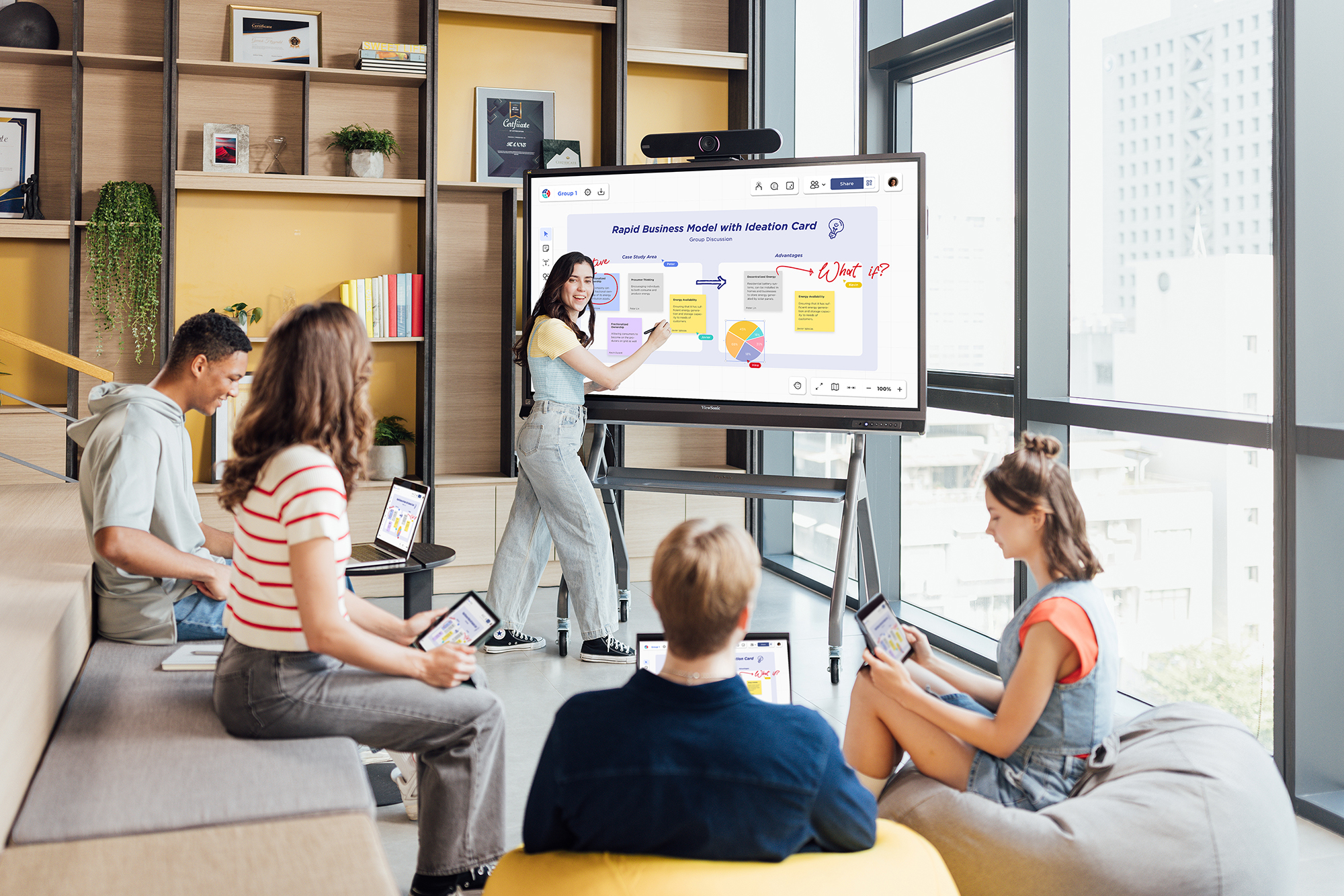
How did teachers improve this podium display? You shared a major classroom frustration with us. For years, teachers had to turn their backs to students to write on the whiteboard or front-of-classroom display. You asked for a better way. We listened and created the myPodium™ ID2456 touch display. This 24-inch screen lets educators face the class while writing. Whatever you draw instantly shows up on the large classroom display or projector for the whole class to see. It keeps you completely engaged with the room.
But we didn’t stop there. We kept listening to your direct feedback to make the next version even better. You wanted sharper visuals, cleaner setups and smarter tools. We took those notes and rolled out the second generation. We upgraded the screen to stunning 4K. We also made two massive physical design changes.
First, we moved all the cable ports to the back of the device facing downward. This ensures messy wires are no longer sticking out of the sides. Your workspace stays perfectly neat. The entire setup connects to a laptop via one single USB-C cable.
Second, we added a dedicated dock that charges the smart pen wirelessly. Now you never have to plug in a USB cable to charge it again. Your pen is simply always ready to go.
Building a Better myViewBoard 3.0
What’s new in our whiteboarding software? We originally created myViewBoard to give teachers a powerful digital whiteboard. But as educators used the software day to day, they quickly noticed a few practical features were missing. Teachers specifically asked for a way to use tabs and a method for saving participate mode. We listened to those ideas and completely redesigned the user interface to build myViewBoard 3.0.
The absolute biggest win for educators is the brand new tabs feature. Teachers can now open multiple lessons in tabs exactly like a web browser. This allows instructors to switch between different class periods instantly without losing their place.
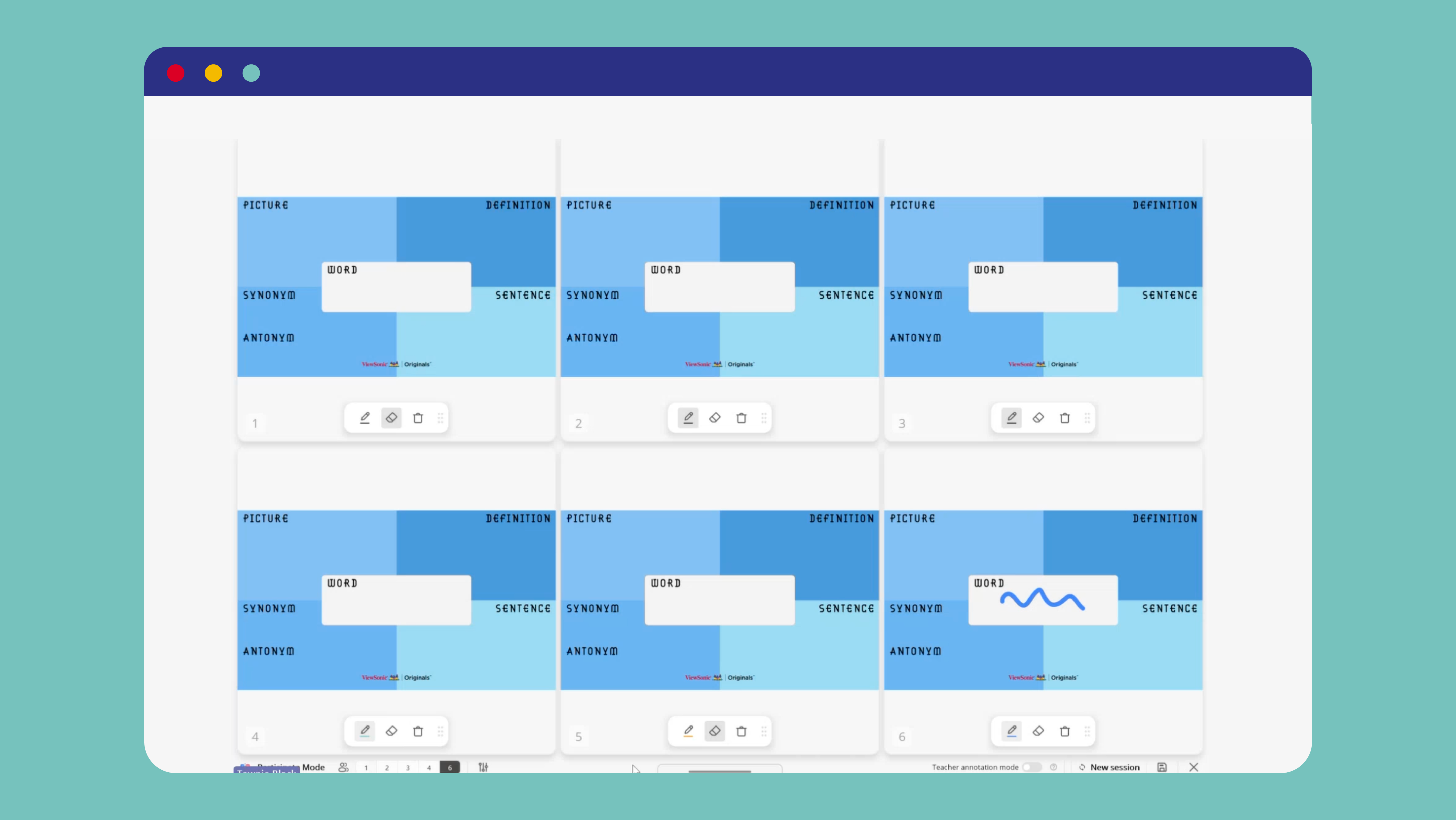
Teachers also loved Participate Mode, but wanted a way to customize and save work. This mode allows up to six students to write on the ViewBoard display at the exact same time. Thanks to teacher input, the new updates allow you to change the background to things like grid paper for math lessons. You can also easily save the final session as a file for student portfolios.
Lastly, we added crucial accessibility tools to make sure no student is left behind. This includes a Spotlight tool to focus student attention, Irlen filters for color blindness and an Immersive Reader for translation and literacy support. It’s a smarter digital whiteboard built entirely around daily classroom needs.
Creating Safer Wireless Casting With AirSync
Why did we build a dedicated casting tool? We packed myViewBoard with tons of amazing features for the classroom. But we heard from plenty of teachers who didn’t want all those extra bells and whistles. You told us you just wanted a simple and reliable way to cast your screen. We listened to that feedback and created AirSync.
This wireless casting software allows you to mirror your screen from any device to one or multiple larger displays. We also added a highly requested Moderator Mode so teachers can see a list of students who want to share their screens. You can approve them one by one. This completely prevents unapproved content from showing up on the board.
It also offers incredible flexibility for everyone in the room. It supports native casting like AirPlay and Chromecast, but it also has a convenient browser-based version at AirSync.net. This means guests can quickly share their screens without downloading a separate app. It is simple, secure and exactly what you asked for.
What does ViewSonic Manager software offer schools? School security is a massive issue these days. Administrators came to us with a critical problem. They needed a secure way to send alerts directly to classroom devices. Relying on a loudspeaker simply isn’t safe when a threat could hear it. We listened and updated Manager. Manager is our remote management tool designed specifically for IT staff. It includes a free feature called CAP Messaging. This tool connects your classroom displays directly to the school’s emergency alert system like CrisisGo or Raptor. Thanks to these integrations, teachers can now see clear visual alerts right on their board for fire drills or lockdowns.
Where can teachers submit their new ideas? We always want to hear from you! You can easily submit ideas using the in-app form located directly inside your myViewBoard settings. You can also join the ViewSonic Educator Community to request new features, share lesson plans and connect with other amazing teachers.
Brea, CA (May 4, 2026) – ViewSonic Corp., a leading global provider of visual and edtech solutions, announces CRN®, a brand of The Channel Company, has named Deidre Deacon, Yesenia Martinez, and Christine Krajewski to its Women of the Channel list for 2026. With this recognition, CRN honors these women leaders whose expertise and vision are leaving a lasting impact.
Each year, CRN celebrates women from vendors, distributors, solution providers and other channel-focused organizations who make a positive difference in the technology industry. The CRN 2026 Women of the Channel honorees are innovative and strategic leaders committed to advancing channel excellence and supporting the success of their partners and customers.
Women of the Channel from ViewSonic:
Deidre Deacon, General Manager, Channel Chief, ViewSonic Canada Deidre Deacon oversees every facet of the company's operations in Canada. Her role includes driving future sales growth, enhancing channel and dealer networks, and leading strategic business planning. As a proponent of channel-first strategies, Deidre guides a proactive team focused on expanding visual solutions across enterprise, education, consumer, and commercial markets, with an emphasis on hybrid work and education models.
Yesenia Martinez, Channel Marketing Manager, ViewSonic America Yesenia drives strategic partner enablement and brand growth across the U.S. AV and VAR channels. She is instrumental in developing integrated marketing resources that empower partners to scale their businesses with ViewSonic. By developing high-impact training programs and expert-led webinars, Yesenia bridges the knowledge gap for partners, ensuring they are positioned as market leaders in visual and edtech solutions. Her leadership in executing industry events and tailored communications continues to strengthen ViewSonic’s presence and partner loyalty within the channel.
Christine Krajewski, Channel Marketing Manager, ViewSonic America Christine spearheads marketing strategy for ViewSonic’s U.S. and Canadian distribution networks. With over a decade of experience across both manufacturing and sales, she leverages a 360-degree view of the channel to drive creative, high-impact programs. Christine is recognized for her ability to translate complex market needs into actionable programs that deliver measurable results for distributors, consistently driving brand growth and deepening regional channel engagement.
“We are proud to have three incredible women from ViewSonic get recognized by CRN and placed on the 2026 Women of the Channel list,” said Kenneth Mau, director of Marketing Communications at ViewSonic. “This list celebrates the trailblazers of the IT industry and seeing three members of our team on this list is a great honor for the company. It reflects the dedication and expertise they bring to our partners and customers each day. We congratulate Deidre, Yesenia, and Christine for making this year’s list and for continuing to make an impact as we expand and grow.”
“It’s a privilege to celebrate the remarkable achievements of these women who are driving meaningful change across the IT channel,” said Jennifer Follett, VP of U.S. Content and Executive Editor, CRN at The Channel Company. “Each honoree has demonstrated exceptional leadership and a commitment to bold, innovative strategies that fuel transformation, growth, and success for their organizations and the broader channel. We’re proud to recognize their impact and look forward to seeing how they continue to shape the future of our industry.”
The 2026 Women of the Channel will be featured online beginning May 4 at www.CRN.com/WOTC.
Founded in 1987 and headquartered in Brea, California, ViewSonic is a leading global provider of visual solutions for the education, business, and consumer markets, with a presence in over 100 countries. Driven by the mission to transform education, workplaces, and lives, the company delivers a unified ecosystem of innovative hardware, software, and services that integrates seamlessly with the platforms, tools, and partners customers trust. Its product portfolio includes monitors, projectors, interactive displays, LED displays, commercial displays, video conferencing systems, and industrial solutions. Complementing its hardware is a robust suite of software offerings—including myViewBoard®, ClassSwift®, TeamOne®, ViewSonic Manager™, and AirSync™—featuring AI-powered tools for collaboration, device optimization, and management. By empowering creativity, collaboration, and lifelong learning, ViewSonic supports customers at every stage in achieving their business and sustainability goals, creating a lasting impact and helping people everywhere connect with purpose—and See the Difference®. Learn more at www.viewsonic.com.
# # #
* This news release contains forward-looking statements that reflect the Company’s expectations with regard to future events. Actual events could differ significantly from those anticipated in this document. Trademark footnote: ViewSonic and the ViewSonic trademarks are trademarks or registered trademarks of ViewSonic Corporation in the United States and/or other countries. All other corporate names and trademarks stated herein are the property of their respective companies.
The Channel Company (TCC) is the global leader in channel growth for the world’s top technology brands. We accelerate success across strategic channels for tech vendors, solution providers and end users with premier media brands, integrated marketing and event services, strategic consulting, and exclusive market and audience insights. TCC is a portfolio company of investment funds managed by EagleTree Capital, a New York City-based private equity firm. For more information, visit thechannelco.com.
The Rise of dvLED: Why All-in-One Solutions Are the New Enterprise Standard
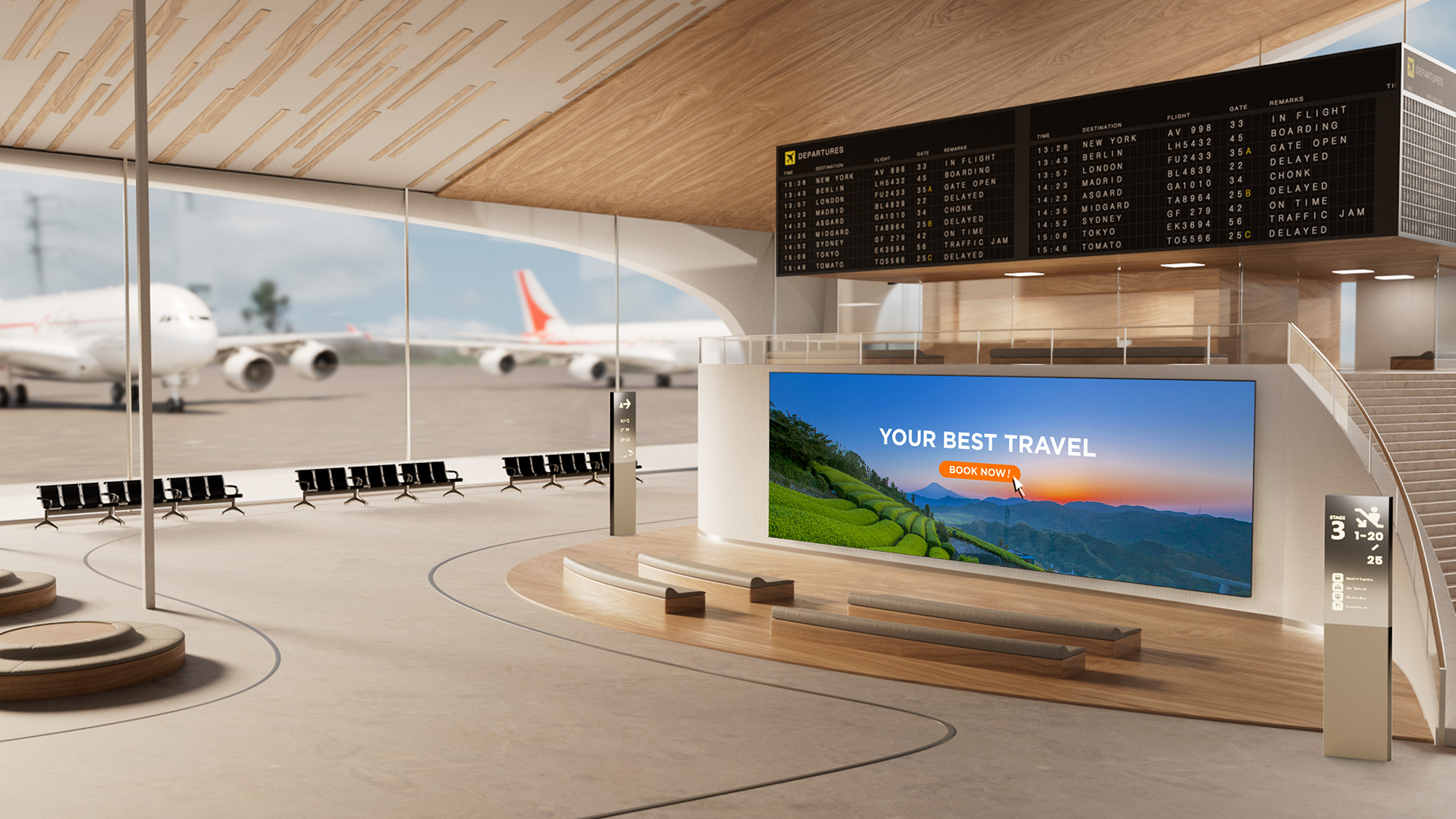
Direct View LED (dvLED) technology has evolved from a niche creative requirement into a critical asset for the modern enterprise. As business workflows become increasingly data-heavy, the industry has shifted toward agility. A high-quality dvLED display provides the massive screen infrastructure needed for high-stakes boardrooms and collaborative flex-spaces.
However, traditional dvLED setups often create a technical bottleneck for businesses. ViewSonic completely eliminates this friction by consolidating high-performance visual excellence into a unified, all-in-one solution that takes the hassle out of custom video walls.
Understanding Traditional dvLED Challenges
Are traditional video walls hard to build?
They certainly can be. You might think that creating a custom video wall for your business is a risky process. The traditional approach requires you to piece together cabinets, power, processing and mounting. Managing multiple vendors can put a lot of pressure on your team to get every detail right. This often leaves the customer to carry the technical risk while hoping remote support is enough to fix any problems.
The ViewSonic All-in-One Advantage
How does ViewSonic eliminate these technical risks?
You do not need to be a dvLED specialist to get a great display. We handle the technical heavy lifting from the initial quote to on-site installation and more. By offering a complete solution, ViewSonic provides a true partnership from start to finish.
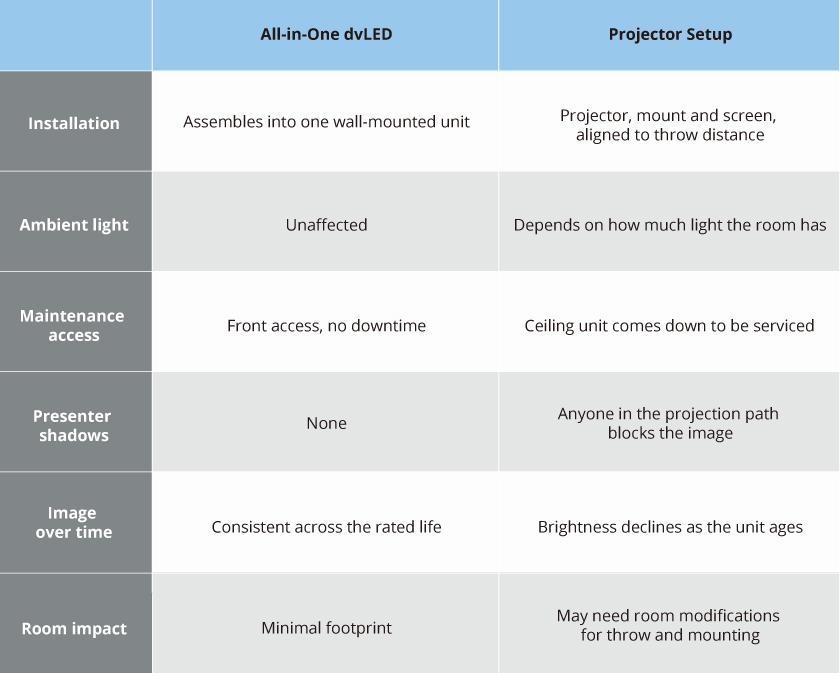
Here is a quick look at how our unified approach compares to traditional challenges:
Carry the technical riskandtroubleshooting burden.
Why Upgrade Your Business Display?
Is an All-in-One dvLED solution right for my team?
Yes! By choosing a ViewSonic All-in-One solution you are making a strategic decision to prioritize efficiency and reduce technical frustration. You can finally deliver a clean and modern display wall without the engineering headaches.
Choose from pre-configured, configurable or mobile video wall solutions for conference rooms, lobbies, training spaces and more. Whether you are a data analyst presenting large datasets or an executive transitioning between meetings, our dvLED solutions provide the professional visual precision required for the modern workspace.
Ready to get started? Contact us today to book your design consultation call!
How USB-C Docking Monitors Reduce School District IT Costs and Complexity
USB-C docking monitors are a powerful tool for modernizing school districts from the front office to the classroom. As educational technology becomes more integrated into the daily curriculum, the hidden costs of expensive docking stations, cable management and lost dongles are beginning to pile up.
But the problem goes way beyond just the initial price tag. Think about the massive deployment and asset management headache traditional setups create. Your IT team has to buy, track and maintain separate monitors, bulky docking stations and a huge tangle of power and display cables for every single desk. When a cord breaks or a dongle goes missing, it creates instant frustration for teachers and piles up support tickets for your staff.
For IT directors and school administrators looking to streamline their hardware footprint while staying within budget, the transition to a single-cable solution isn't just a luxury. It's an innovative, strategic move to reduce technical friction for teachers and dramatically cut down the time and money spent managing campus technology.
What is a Docking Monitor?
How does a USB-C docking monitor work? A docking monitor is a high-performance display that acts as a central hub for a workstation. Unlike traditional monitors that only receive a video signal, a USB-C monitor uses a single USB-C cable to handle high-speed data transfer, video output and laptop charging simultaneously.
What really makes it a true docking monitor are the extra built-in features that completely replace a separate external dock:
RJ45 Port: This provides a secure and lightning-fast hardwired internet connection directly to your laptop.
USB Hub: This lets you easily connect all your daily accessories like a mouse, keyboard and webcam right to the monitor.
Daisy Chaining: Select models let you easily link a second monitor directly to the first one for a massive dual-screen setup.
In a school setting, this means a teacher or staff member can walk up to a desk, plug in one cable and instantly have their laptop connected to the school network, their favorite accessories and a large display all while their battery charges.
The Benefits of USB-C Docking Monitors in Education
Why are schools switching to docking monitors? The primary driver behind the shift to docking monitors is unmatched ease of use. By removing the spaghetti mess of cables and the confusion of multiple ports, schools create an environment where technology is a tool rather than a barrier.
Accessibility for All Staff
Are docking monitors easy to use? Technology should never be intimidating. For office staff or educators who may not feel tech-savvy, the docking monitor is a great solution. There's no need to worry about which port goes where or whether they have the right adapter. Once deployed, it’s a simple plug-and-play experience that builds confidence and saves time during busy school days.
Versatility for Shared Spaces and Substitutes
How do these monitors help shared classrooms? Classrooms are high-traffic environments and a USB-C docking monitor makes a classroom truly universal. The classroom teacher can use the large screen for grading and lesson planning in the morning. Then if a substitute or traveling teacher takes over the room later, they can simply plug in their own device and be ready to go in seconds. This flexibility ensures that every workstation remains functional regardless of who is using it.
Creating Learning Stations for Students
Can students use the teacher's monitor? The docking monitor transforms the teacher’s desk into a collaborative learning hub. Instead of a teacher bending down to look at a student’s small laptop screen, the student can simply plug their device into the USB-C cable. The desktop instantly becomes a high-visibility station for one-on-one feedback or small-group work. This allows the teacher to see student work clearly and comfortably. You can see how one school district supports small group and hybrid learning with the ViewSonic 24-inch VG2456 docking monitor to bring this exact concept to life.
Cutting Costs and Reducing IT Complexity
How do docking monitors save money? Budget transparency is vital for school districts. Transitioning to docking monitors provides a clear path to reducing hardware expenditures.
Eliminating the Docking Station Tax
Do you still need a separate dock? You do not. Traditional setups require purchasing a separate docking station in addition to the monitor. Those separate docks can cost between $150 and $300. By choosing a display with a built-in dock, you eliminate an entire category of hardware. This cost saving makes it feasible to outfit all your classrooms and office desks with a professional-grade workstation.
Maximizing Screen Space
Are laptop screens big enough for teachers and staff? While laptops are portable, they often lack the screen size needed for heavy lifting. Tasks like handling IEPs, grading programs or master scheduling software require educators to see more data at once. With sizes ranging from 24” to 34”, a docking monitor provides the necessary space for these high-detail tasks at a fraction of the cost of a multi-component setup.
Maximizing Productivity with Daisy Chaining
What is daisy chaining? One of the most powerful features of modern docking station monitors is the ability to daisy chain. This allows you to connect a second monitor directly to the first one using a single output rather than running two separate cables to the laptop.
How does it help school staff?
For Office Staff: A staff member managing substitute schedules can spread their spreadsheets across two screens to see the whole week at a glance.
For Teachers: Grading becomes much faster when you can have student work open on one screen and the digital grading platform open on the other. This allows for side-by-side comparison and instant data entry.
Best Practices for Implementing Docking Monitors
How do you set up a successful monitor refresh? To get the most out of your hardware refresh, consider these implementation tips:
Standardize Cables: Ensure every room is equipped with a high-quality and high-bandwidth USB-C cable to prevent connectivity issues.
Prioritize Power Delivery: Look for monitors that offer at least 60W to 100W of power delivery to ensure even the most powerful faculty laptops stay charged.
Get Best-in-Class Docking Monitors with ViewSonic
ViewSonic provides a range of USB-C docking monitors specifically designed to simplify school environments. With features like built-in Ethernet ports, daisy-chaining capabilities and ergonomic stands, ViewSonic monitors help schools cut costs without sacrificing performance.
Ready to simplify your school's workstations? Explore ViewSonic's full line of education monitors and see how much your district can save today.
The Field Solutions Team Honored as Platinum Recipient in “Best Tech Support” Category
Brea, CA (April 23, 2026) – ViewSonic Corp., a leading global provider of visual and edtech solutions, announces that the company’s Field Solutions Team has been recognized as the Platinum winner in the Best Tech Support category in this year’s SCN Stellar Service Awards.
This award acknowledges companies who lead with their exceptional service. Voted upon exclusively by the SCN readers and subscribers, this achievement exemplifies ViewSonic’s commitment to providing cutting-edge and impactful support in today’s Pro AV ecosystem, all while prioritizing customer satisfaction and partner trust.
“We’re honored to have the Field Solutions Team recognized in this year’s awards,” said Jeff Muto, Business Line Director at ViewSonic. “They’ve come a long way evolving as a team and adapting to the ever-changing Pro AV environment. This recognition validates the hard work and commitment they have invested in delivering service excellence.”
Founded in 1987 and headquartered in Brea, California, ViewSonic is a leading global provider of visual solutions for the education, business, and consumer markets, with a presence in over 100 countries. Driven by the mission to transform education, workplaces, and lives, the company delivers a unified ecosystem of innovative hardware, software, and services that integrates seamlessly with the platforms, tools, and partners customers trust. Its product portfolio includes monitors, projectors, interactive displays, LED displays, commercial displays, video conferencing systems, and industrial solutions. Complementing its hardware is a robust suite of software offerings—including myViewBoard®, ClassSwift®, TeamOne®, ViewSonic Manager™, and AirSync™—featuring AI-powered tools for collaboration, device optimization, and management. By empowering creativity, collaboration, and lifelong learning, ViewSonic supports customers at every stage in achieving their business and sustainability goals, creating a lasting impact and helping people everywhere connect with purpose—and See the Difference®. Learn more at www.viewsonic.com.
# # #
* Actual performance, compatibility, and user experience may vary depending on system configuration, network conditions,usage environment, and other factors. Features and specifications are subject to change without notice. This news release contains forward-looking statements that reflect the Company’s expectations with regard to future events. Actual events could differ significantly from those anticipated in this document. Trademark footnote: ViewSonic and the ViewSonic trademarks are trademarks or registered trademarks of ViewSonic Corporation in the United States and/or other countries. All other corporate names and trademarks stated herein are the property of their respective companies.
If you’re using one of our Android™ EDLA-certified ViewBoard®displays (like the IFP41 or IFP51 series), you already have a world of Google apps at your fingertips. Here’s how George turns that technology into something truly special.
Make Your ViewBoard Feel Like a Giant Phone
Most of us are used to clicking buttons at the bottom of a screen. George showed a better way. By updating your settings, you can switch to gesture-based navigation.
Imagine swiping down for settings or swiping up to see all your apps. It makes the ViewBoard feel just like a giant smartphone. It is fast, intuitive and keeps your lesson moving without you having to hunt for icons.
Breaking Language Barriers in Real Time
One of the most powerful tools George highlighted was Google Translate. Because these panels have the Google Play Store, you can download the app directly to your ViewBoard.
George shared a funny story about translating his own parent-teacher conferences as a kid. He joked about “tweaking” the translation so he wouldn’t get in trouble! By using Google Translate on your board, parents will know exactly what you’re saying. Students won’t be able to translate the opposite of your words.
You can use the split-screen feature to run Google Translate next to your slides or Chrome. As long as your ViewBoard has a microphone (such as the IFP41 series), you can provide live captions for ELL students. It is an easy way to make sure every student and parent feels included.
Level Up Your Engagement with Canva
We all know teachers love Canva. When you run the Canva app on your ViewBoard, you can sync it with your phone.
George showed how you can use your phone as a remote to add fun effects like digital curtains or bubbles. It turns a standard presentation into an interactive experience that keeps students focused. Remember,almost any app you know and love can be used on our ViewBoards® with Google Play Store.
See the Magic for Yourself
It was even great to see George learn something new! He discovered how to screen record directly on the panel during the session. We are all learning together in this community.
Thunderbolt Connectivity: The Strategic Investment for Modern Business Workspaces
Thunderbolt connectivity has evolved from an essential tool for creative professionals into a
critical asset for the modern enterprise. As business workflows become increasingly data-heavy,
the hardware supporting your team must do more than just display information. It must serve
as a high-speed engine for productivity and seamless transitions.
The traditional office desk anchored by a desktop tower and a nest of cables is a relic of the past.
Today’s executives and managers operate in a hybrid reality, moving between high-stakes boardrooms,
home offices and collaborative flex-spaces.
What Makes a Thunderbolt Monitor Different?
For a business, the difference between USB-C and Thunderbolt is the difference between a standard
road and a dedicated express lane. Thunderbolt provides a dedicated tunnel for data and video,
ensuring that a large file download never compromises the quality of a video presentation.
Feature
Standard USB-C
Thunderbolt 3 / 4
Max Bandwidth
10–20 Gbps
40 Gbps
PCIe Data Support
Limited
Full Support (Internal-drive speeds)
Daisy Chaining
DisplayPort alt mode
Native (Up to 6 devices)
Ethernet Speed
Typically 1 GbE
Up to 10 GbE
Why Business Professionals Are Making the Switch
Why should your team upgrade to Thunderbolt? The move to Thunderbolt is a strategic decision to
prioritize efficiency and reduce technical friction. Standard HDMI and basic USB-C hubs were not
engineered for the simultaneous demands of 4K video conferencing, rapid data backups and high-wattage laptop charging. When professionals rely on underpowered hubs they face flickering displays,
slow file transfers and the frustration of dongle management.
To maintain a high-performance, laptop-centric studio without sacrificing desktop-class reliability,
Thunderbolt has become the enterprise standard.
Single-Cable Executive Simplicity
How does a single cable save time? For the professional on the move, seamless transitions
are essential. Thunderbolt allows a laptop to instantly transform into a fully powered executive
workstation with a single connection. By simultaneously supporting data, audio, video and power
delivery up to 100W, it eliminates the daily hassle and wasted time of wrestling with separate cables.
Beyond saving setup time, this single-cable solution drives cost efficiency by removing the need
to purchase expensive standalone docking stations. This easily eliminates the need for bulky
power bricks and multiple adapters to create a cleaner, more organized workspace that reduces
troubleshooting and mental clutter.
High-Speed Data Management
Does Thunderbolt speed up file transfers? Modern business depends on massive datasets from cloud-synced libraries to external encrypted drives. Because Thunderbolt supports PCIe data transfer,
external storage operates at speeds nearly identical to internal drives. This allows for rapid media
ingestion, lightning-fast backups and the ability to work directly off external drives with minimal lag.
Multi-Display Expansion
Can you connect multiple monitors easily? Efficient multitasking requires screen real estate. Whether it
is managing complex spreadsheets on one screen while video conferencing on another, Thunderbolt’s
support for daisy chaining allows you to link multiple monitors together via a single chain. To set this
up you simply need a primary monitor equipped with both Thunderbolt in and out ports. Crucially,
Thunderbolt provides the massive bandwidth needed to support high-resolution daisy chaining like
running dual 4K displays without sacrificing smooth refresh rates or visual clarity. This creates a high-
productivity multi-monitor array with minimal cable complexity.
Professional Visual Precision
Does connection type affect image quality? Color accuracy and panel quality are vital for business
professionals who handle high-end presentations, data visualization and brand-consistent collateral.
Standard connections often force a compromise between display resolution and data transfer speeds
but Thunderbolt’s massive 40 Gbps bandwidth eliminates this bottleneck.
This massive bandwidth allows you to:
Drive uncompressed 4K and 5K displays at optimal refresh rates to ensure absolute clarity for
complex visual data.
Scrub through uncompressed video or manipulate giant design files directly from external drives
without experiencing screen lag, dropped frames or artifacting.
Deliver professional-grade visual fidelity while concurrently running high-speed network transfers or
daisy-chaining additional hardware without signal degradation.
Thunderbolt’s Impact Across Professional Disciplines
Who benefits the most from a Thunderbolt setup? The industry has shifted toward agility,
with high-performance laptops increasingly replacing traditional desktops as the primary
computing engine for modern professionals. Thunderbolt monitors act as the bridge
in this evolution. They provide the desktop-class infrastructure needed to turn a portable
device into a permanent professional centerpiece.
Data Analysts: Benefit from massive bandwidth to move large datasets and the screen
real estate to visualize them.
Executives: Enjoy the single-cable connectivity between meetings and deep-work sessions.
Project Managers: Use multi-monitor setups to track timelines, communications
and budgets simultaneously.
IT Departments: Enjoy simplified asset management by eliminating the need for standalone docking
stations. This universal standard guarantees incredible ease of use and rapid deployment to keep
your entire team working smoothly.
Furthermore, Thunderbolt provides seamless cross-platform compatibility to effortlessly drive high-resolution dual-monitor setups whether your users operate an Apple-centric or high-end Windows fleet.
This universal standard eliminates the headache of managing fragmented docking solutions for mixed-device environments.
When Thunderbolt Delivers the Highest ROI
How does this investment pay off? You will see the greatest long-term return on a Thunderbolt setup
when focusing on:
Future-proofing laptop-based workflows: By investing in Thunderbolt 4’s massive 40 Gbps
bandwidth, you ensure your display and docking infrastructure won’t become obsolete as your team
upgrades to next-generation laptops.
Maximizing output on data transfers: For professionals managing heavy external storage,
the hours saved by moving massive files at internal-drive speeds directly translate to increased
productivity and less downtime.
Streamlining shared workspaces: In collaborative environments that require frequent docking, the
universal standard and cross-platform reliability of Thunderbolt reduce IT support tickets, minimize
hardware wear-and-tear and keep teams working smoothly.
How ViewSonic Monitors Support Professional Workflows
What are the best Thunderbolt monitors for business? ViewSonic designs its ColorPro™ series and
professional displays to align with the rigors of the modern business environment. These monitors
offer high-resolution panels, substantial power delivery and integrated docking functionality on select
models that replaces expensive standalone docks. With factory-calibrated visual quality and a focus on
ergonomic design, they are the anchor of a high-efficiency workspace.
Find the Right Thunderbolt Monitor for Your Organization
Are you ready to upgrade your office? Upgrading to a Thunderbolt monitor is an investment in your
team’s daily output. By consolidating power, data and visual excellence into a single-cable solution, you
eliminate the friction that slows down modern business. If you are looking to maximize the efficiency
of your Apple-centric or high-end Windows fleet, our Thunderbolt 4 monitors offer the most seamless
integration available.
You can learn more and find the professional display that will redefine your workspace by checking out
ViewSonic Mac Monitors.
Disclaimer: Specifications and availability are subject to change without notice. Actual performance, data transfer speeds, and user experience may vary depending
on system configuration, cable quality, connected devices, and usage conditions. Thunderbolt and the Thunderbolt logo are trademarks of Intel Corporation or its
subsidiaries. All other corporate names and trademarks stated herein, including Apple and Windows, are the property of their respective companies.
Copyright @2026, ViewSonic Corporation. All rights reserved.
Beyond the Apple Ecosystem: Budget-Friendly MacBook Air Monitors for Higher Education
We've spent decades working closely with educators and students to understand exactly what works in the classroom. We know firsthand that the MacBook Air is a massive hit on college campuses. It's lightweight, powerful and boasts amazing battery life. But there's a catch: the standard 13-inch screen can feel incredibly small when you're juggling research papers, spreadsheets and video lectures.
Adding an external monitor is the perfect way to boost your daily productivity. However, staying strictly inside the Apple ecosystem can quickly break a student budget. We believe every student deserves access to a great workstation. That's why high-quality, budget-friendly monitors for the MacBook Air are driving equity in higher education.
Bridging the Gap with ViewSonic® Monitors
What is the best budget monitor for a MacBook Air? We designed our displays to deliver premium features without the premium price tag. For a complete look at our top recommendations, you can read our comprehensive guide on the best monitors for MacBook Air.
Let's look at why these high-value monitors are the ideal companions for your MacBook Air setup.
Single-Cable Simplicity with Thunderbolt 4
Can you connect a MacBook Air to a monitor with one cable? Yes! Our advanced monitors feature lightning-fast Thunderbolt 4 connectivity.
You can connect your laptop to the monitor and charge it at the exact same time using just one cable. This eliminates bulky power adapters and messy cords on your desk. It keeps your study space clean, streamlined and organized.
Ergonomics for Long Study Sessions
Do these monitors have good ergonomics? They absolutely do. Comfort is key when you're pulling a late-night study session.
Our ergonomic monitors let you tilt, swivel, pivot and adjust the height to find your perfect viewing angle. This helps prevent neck and back pain during long hours at your desk.
Crisp Visuals and Color Accuracy
Do budget monitors look as good as a Mac screen? When you're used to the brilliant Retina display on a MacBook Air, you want an external monitor that looks just as vibrant.
Our standard professional monitors use SuperClear IPS panel technology to ensure you get stunning colors and wide viewing angles. However, if you're a creative arts student who needs absolute perfection, we've got you covered there too. Our ColorPro 4K and 5K monitors for Mac and PC ecosystems give graphic designers and video editors elite color accuracy without the massive price tag.
Multi-Monitor Setups with Daisy Chaining
Can you connect two monitors to a MacBook Air? Yes, you can easily expand your workstation using a method called daisy chaining.
Advanced models like the ViewSonic VP2488-4K and VP2788-5K support daisy chaining through lightning-fast Thunderbolt 4. This means you can plug your MacBook Air into the first monitor using a single cable. Then, you just connect that first monitor directly to a second screen. This gives you a massive dual-monitor setup with minimal cable clutter. It's the ultimate productivity hack for handling complex projects, editing videos and managing massive spreadsheets.
Built for the Institution
Why do universities choose ViewSonic? It's not just about individual students. IT departments and university administrators need reliable technology that fits within their campus budgets.
Our monitors are built for the institution. They offer a lower total cost of ownership, easy deployment and industry-leading warranties. This makes them a smart investment for universities looking to upgrade their computer labs, libraries and faculty offices while simultaneously promoting equity across the student body.
Find the Perfect Monitor for Your College Setup
Every student deserves the tools they need to reach their full potential. You don't have to overspend on expensive brand names to get a professional, high-quality workstation.
Best for Creators: ViewSonic VP2788-5K
If you’re an art, film or design student, color accuracy is everything. This monitor delivers breathtaking details and true-to-life colors for your most demanding creative projects.
Standout features:
27-inch 5K resolution for incredibly sharp and detailed visuals.
Thunderbolt 4 connectivity for lightning-fast data transfer and easy daisy chaining.
Elite color accuracy to bring your photos, graphics and videos to life.
Brilliant DCI-P3 color matches Apple's native color space.
Advanced ergonomic stand to keep you comfortable during long editing sessions.
Best for Research: ViewSonic VP2488-4K
When you spend hours reading articles, analyzing data and writing essays, you need a screen that is crisp and easy on the eyes. This monitor is the perfect size for cramped dorm desks while still giving you tons of digital workspace.
Standout features:
24-inch 4K resolution for crystal-clear text and vibrant images.
Thunderbolt 4 support for a simple one-cable setup and daisy chaining.
Built-in eye care technology to reduce eye strain during late-night study sessions.
Fully adjustable stand to help you find the perfect viewing angle.
Upgrade Your Setup Today Ready to boost your productivity? Browse our full lineup of ViewSonic monitors and grab the perfect display for your dorm room or home office today.
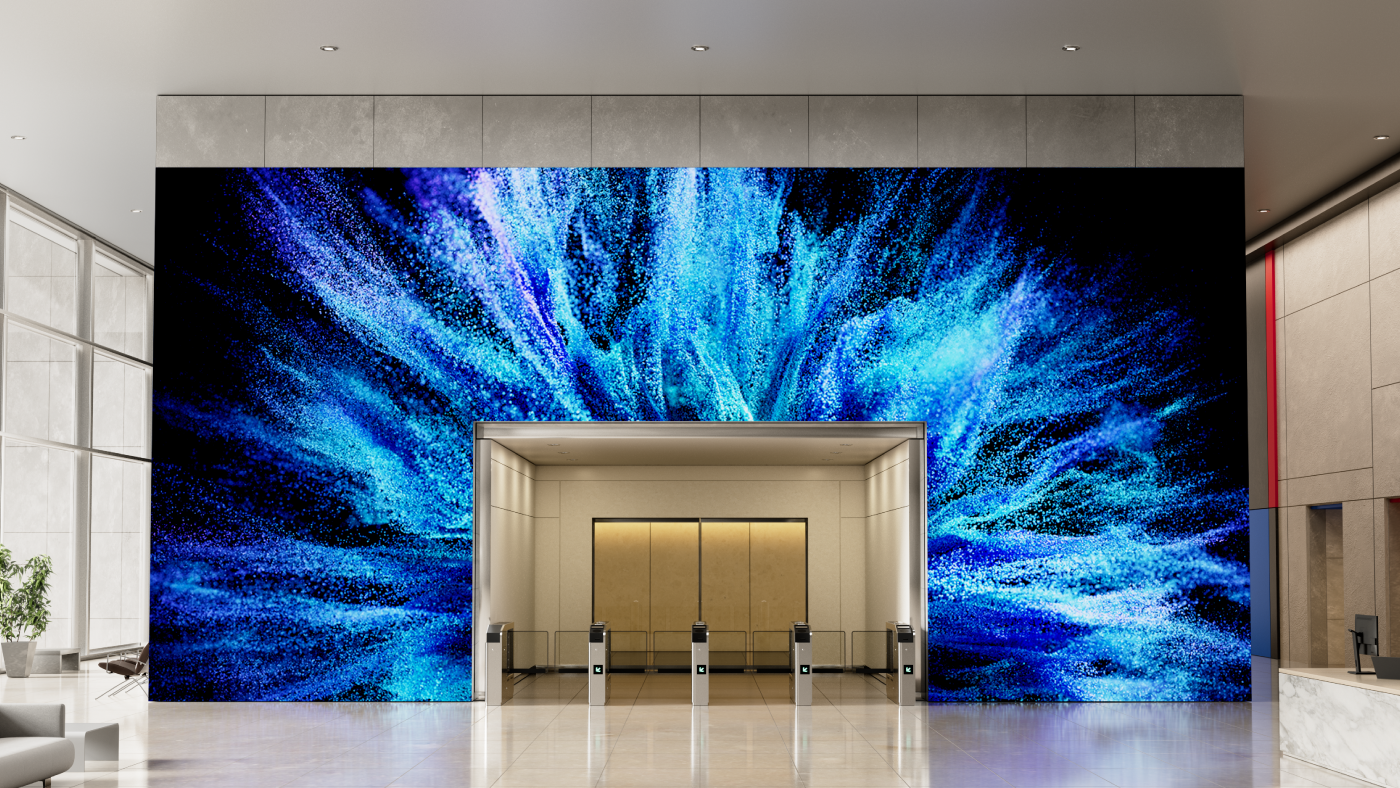
ViewSonic Direct View LED Display Accentuates Entryway in Technology-Focused Medical Center
CUSTOMER
Formed by the 2018 merger of Bon Secours Health System and Mercy Health,
Bon Secours Mercy Health is the fifth largest Catholic health care company
in United States and one of the nation’s 20 largest health care systems. With
48 hospitals, thousands of providers, more than 1,000 points of care and over
60,000 employees, Bon Secours Mercy Health is dedicated to continually
improving health care quality, safety and cost effectiveness. The company’s
hospitals, care sites and clinicians are recognized for clinical and operational
excellence, and it uses robust measurement and reporting processes
to continually enhance care and improve outcomes.
“I was very impressed with both the level of service we received from
ViewSonic and the quality of the product. All the components of the
system went together nicely – everything was milled correctly, and the
panels self-aligned and snapped on easily.”
— Richard Banus, Account Manager at Onyx Audio Visual
PARTNER
A design-build firm dedicated to working closely with clients to identify their
requirements and vision, Onyx is an industry leader in audio visual technology
with over 30 years of experience in the U.S. and internationally. The company
leverages its extensive experience in engineering to install and integrate highly
complex systems. With a track record of successful, timely project execution,
Onyx continues to cultivate relationships with government agencies, corporate
enterprises, houses of worship, and educational institutions.
CHALLENGE
The hospital required
a high-tech entryway display
to honor donors for its new
smart facility expansion.
IT needed a state-of-the-
art video wall that visually
matched the hospital’s
advanced medical technology.
The team faced the challenge
of sourcing a large, seamless
display that was easy to install.
The chosen solution also
needed to overcome typical
technical hurdles to ensure
easy long-term maintenance.
Part of the Bon Secours medical group, The Harbour View Campus in
Suffolk, Virginia was being expanded with a three-story, 100,000 square
foot addition. Slated to become the system’s first smart hospital, the facility
required a dedicated entryway space to give thanks to the donors who made
the expansion possible. The primary challenge for the IT team was sourcing a
state-of-the-art digital video wall that visually corresponded with the hospital’s
advanced medical technology.
Furthermore, they needed a solution that could overcome the typical hurdles
of large-scale video walls: it needed to be a large, seamless display that was
both easy to install and easy for the customer to maintain. To find a system
that met all these strict requirements, the team turned to their longtime
partner, Onyx Audio Visual, for help. Their account manager, Richard Banus,
recognized these specific challenges and recommended dvLED technology
as the ideal solution.
“The benefits offered by dvLED technology are outstanding,” said Banus.
“Not only does it deliver a large, seamless display, it is easier to install
and easier for customers to maintain.”
SOLUTION
Onyx recommended the
ViewSonic 136-inch dvLED
(LDM136-151) because it
offered the exact features
the hospital needed.
The display featured high
brightness, integrated
speakers, and a surface
treatment resisting dust,
moisture and impact.
This All-in-One solution
included wireless casting for
easy management over the
hospital’s LAN.
The display also featured
an ultra-thin aesthetic with
a detachable control box that
enabled an even sleeker look.
Banus acquired quotes from display brands he had worked with in the past
and was pleased to discover that ViewSonic also offered a 136-inch dvLED.
“While I’ve used ViewSonic monitors and IFP displays, we were just becoming
an official ViewSonic dealer,” said Banus. “They had exactly what I was looking
for in a dvLED – high brightness, integrated speakers and GOB surface
treatment, which makes it impervious to dust, moisture and bumps. It’s truly
an All-in-One solution with everything included that’s needed for installation.
It even provided wireless casting that would allow my customers to manage
easily over their LAN.”
It was also a winner aesthetically, Banus added, with an ultra-thin appearance
and detachable control box that enabled an even sleeker look.
Banus shared the results of his comparison with the Bon Secours IT team and
together they chose the ViewSonic (LDM136-151) 136-inch dvLED. The product
shipped quickly and the team was ready to complete the installation in time
for the grand opening, just a week away.
RESULTS
The sleek, vibrant digital
display now greets patients
and visitors, rotating content
to thank donors and provide
important announcements.
The installation perfectly
echoes the high-tech design
of the medical center and has
been very well received by
staff and visitors.
The All-in-One design
made installation easy,
as components were
milled correctly and
panels self-aligned.
The hospital was highly pleased
with both the price point and
the final visual outcome.
Patients and visitors who enter the Bon Secours Harbour View Medical Center’s main entrance are greeted with a sleek and vibrant digital display that echoes the Center’s high-tech design and service. Rotating content thanks donors and provides important announcements.
“The project lead sent an email letting me know how well-liked the display is by Center staff and visitors,” said Banus. “They were pleased with the price-point, and I haven’t had a single negative comment since it’s been up and running.” Banus noted that while he had installed many ViewSonic ViewBoard® interactive IFP displays in the health system’s offices and conference rooms, this was his first time working with a ViewSonic All-in-One dvLED video wall.
“I was very impressed with both the level of service we received from ViewSonic and the quality of the product,” he said. “All the components of the system went together nicely – everything was milled correctly, and the panels self-aligned and snapped on easily.”
The All-in-One design is ideal for an easy, streamlined process, he added, since the installers have everything they need right at hand, including cabinets, tiles, power supplies, and cables.
“When they were done, we turned on the display and it lit up and looked great,” he concluded. “The client loves how it looks and is happy with the outcome.”
Community Center Enhances Civic and Community Events with ViewSonic 136-Inch Direct View LED
CUSTOMER
The City of Highland Heights Community Center serves 9,000 residents, providing a convenient space for weddings, birthdays, graduation parties, events and community meetings year-round. City residents and businesses can reserve the Buckeye room (64 guest capacity) or the Highland room (175 guest capacity) for a rental fee. Both party rooms have access to the Center’s kitchen. Many Highland Heights civic and community groups use the Center to host monthly or weekly meetings.
“The large [dvLED] display is a focal point in the room and makes a statement with the clear and bold picture. Professionally, presentations are now easy to see from any seat in the room, and I have had only positive feedback from residents who use the screen in social gatherings.”
— Audrey Gerbasi, Community Program Coordinator at the Center
PARTNER
iVideo Technologies is an audio-visual technology integration partner dedicated to empowering organizations through integrated AV, broadcast, and technology systems since 1968. With several
locations across Ohio and in Pittsburgh, PA, iVideo delivers communication solutions that support clarity, collaboration, and audience engagement across all sectors nationwide.
CHALLENGE
The city wanted to upgrade
video equipment in its
175-capacity Highland room
to enhance presentations and
engagement.
They needed a vibrant, modern
display that was easily visible
to anyone in the room.
The center sought to eliminate
lighting and size struggles
caused by using a portable
projector.
Staff required a system that
would be readily available and
easy to use for various events.
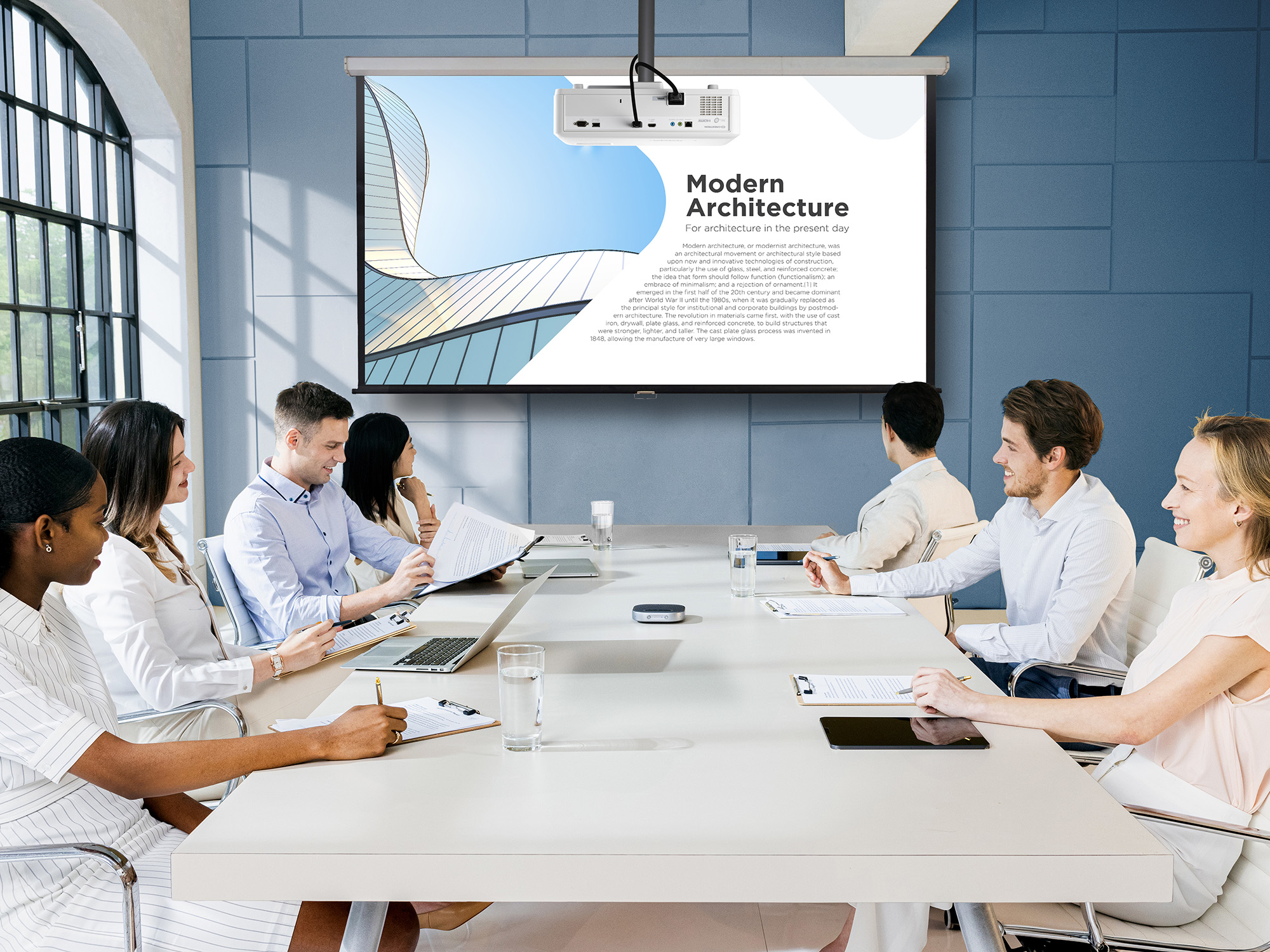
The City of Highland Heights was looking to upgrade the video equipment in the Community Center’s largest room. With a capacity of 175, the Highland room was a high-demand space for hosting scheduled civic and community group meetings, as well as for rental by residents for parties and events. The ability to display content would enhance presentations and offer a way to boost engagement at events.
“Our goal was to provide a vibrant, modern display that could be easily seen by anyone in the room,” said Audrey Gerbasi, Community Program Coordinator at the Center. “We were also looking forward to eliminating the struggles with lighting and size presented by the portable projector that we would occasionally bring into the room. We needed a system that would be readily available and easy to use.”
SOLUTION
Reseller iVideo Technologies recommended the ViewSonic 136-inch dvLED display, model LDM136-151.
The expansive screen provided clear viewing with high brightness, a strong contrast ratio, and fast refresh rates.
A modular design with hotswappable front LED panels greatly simplified maintenance compared to traditional video walls.
The Glue-on-Board surface provided essential durability against bumps, dust, and moisture during energetic room rentals.
The Center’s reseller partner, iVideo Technologies, had worked with the city previously, including the installation of AV equipment in the council chambers. When Senior Account Manager Dale Kiser was briefed on the goals for the Center’s Highland room, he immediately thought of the ViewSonic® 136-inch Direct View LED (dvLED) display (model LDM136-151).
“We have corporate accounts that are standardized on ViewSonic CDE displays for their conference and training rooms, so I’m very familiar with their products and I know I can count on ViewSonic to provide outstanding service,” said Kiser. “I had recently worked with ViewSonic to develop a dvLED solution for another customer and recognized that it would be an ideal solution for the Center.”
The expansive 136-inch screen would ensure clear, vibrant viewing throughout the space, with 600-nit high brightness, 6,500:1 contrast ratio and 3,840Hz refresh rate, while the modular design with hot-swappable front LED panels would greatly simplify maintenance compared to traditional video walls.
Importantly, for a room that would be used for events ranging from professional meetings to energetic parties, the Glue-on-Board (GOB) surface treatment provided the durability needed to withstand potential bumps along with resisting dust and moisture.
“I like recommending this product because it delivers such nice color and brightness, and the form factor is very aesthetically pleasing,” said Kiser. “I like working with ViewSonic because the service, support and quick reaction times from their team really gives me a warm fuzzy feeling,” he concluded with a smile in his voice.
Kiser developed a complete solution that included a QSC system with touch panel control and with the Center’s approval of his plan installation was completed without issue by iVideo’s installation field team.
RESULTS
The AV makeover added professionalism and energy to civic events, meetings, and private parties.
Presentations are easily seen from any seat, generating positive feedback from residents attending social gatherings.
Allowing community members to showcase personal media on the big screen boosted the space’s rental appeal.
Time-consuming projector challenges were eliminated, paving the way for future resident movie nights.
According to Gerbasi, the Highland room AV makeover has made a huge impact on professional meetings, civic events, and private parties, adding both professionalism and energy to the space.
“The large display is a focal point in the room and makes a statement with the clear and bold picture,” she said. “Professionally, presentations are now easy to see from any seat in the room, and I have had only positive feedback from residents who use the screen in social gatherings.”
Additionally, the ability for community members to showcase personal images or watch a chosen broadcast or video has added to the space’s rental appeal.
“People are excited when they see the eye-catching power of the big screen,” said Gerbasi. “They appreciate the grandness of the picture and like to come up with ways to incorporate the new technology into their events.”
Even when the display is not being used to support presentations, civic meetings have been enhanced by the ability to showcase the city’s logo on the screen during events, Gerbasi added.
“Everyone seems very satisfied with the outcome, and we’re thrilled to have eliminated the time-consuming challenges we had with the projector,” Gerbasi concluded. “We look forward to offering movie nights to our residents and expect many more years of positive feedback.”
Summative vs Formative Assessments: When to Use Them and How ClassSwift Can Help
Assessment has always been a core part of teaching, and it plays an essential role in supporting student learning. Educators are expected to monitor understanding, provide meaningful feedback, meet curriculum requirements, and manage grading and reporting, often within limited instructional time.
Choosing the right type of assessment at the right moment helps teachers support student growth, adjust instruction more effectively, and measure learning outcomes with confidence.
Importantly, assessments do not have to wait until homework is checked or tests are graded.
This guide explains formative and summative assessments, offers practical guidance on when to use each, and shows how tools like ViewSonic ClassSwift can help support better teaching and learning.
What Are Formative and Summative Assessments?
Formative and summative assessments serve different purposes within the learning process. Both are essential, but they answer different questions for teachers and students.
Formative assessment is used during instruction to check understanding and guide next steps. These assessments are typically low stakes and ongoing. The primary goal is to provide feedback that helps students improve while learning is still happening.
Common examples include:
Quick quizzes or polls
Exit tickets
Class discussions
Practice activities
Peer feedback
Checks for understanding during lessons
Summative assessment is used after instruction to evaluate overall learning. These assessments are usually higher stakes and often contribute to final grades or reporting.
Common examples include:
Unit tests and final exams
End-of-term projects
Standardized assessments
Final presentations or portfolios
Used together, formative and summative assessments provide a more complete picture of student learning.
Key Differences Between Formative and Summative Assessment
While both assessment types measure learning, they differ in purpose, timing, and how the results are used. Understanding these differences helps educators choose the right approach for each instructional moment.
Category
Formative Assessment
Summative Assessment
Purpose
Improve learning during instruction
Evaluate learning after instruction
Timing
Ongoing throughout lessons
At the end of a unit, term, or course
Feedback
Immediate and actionable
Often provided after completion
Impact on Grades
Low or no grade impact
High grade impact
Instructional Role
Guides instructional adjustments
Confirms learning outcomes
Common Formats
Polls, quizzes, discussions
Exams, projects, standardized tests
Rather than choosing one over the other, effective assessment strategies use both intentionally.
When to Use Each Type of Assessment
The best assessment choice depends on your instructional goals and where students are in the learning process.
Factors to Consider When Choosing Assessment Types
Before deciding which assessment to use, consider:
Instructional goals: Are you supporting learning or evaluating mastery?
Student needs: Do students need feedback, practice, or a final measure of understanding?
Curriculum expectations: What standards or outcomes must be demonstrated?
School or district policy: Are specific assessments required?
Timing: Is learning still in progress, or has instruction concluded?
These factors help ensure assessment supports learning rather than interrupting it.
When to Use Formative Assessment
If your goal is to guide learning and adjust instruction, formative assessment is the right choice. It works best when you need to:
Check understanding during a lesson
Identify misconceptions early
Adjust pacing or instructional strategies
Support student confidence and engagement
Encourage reflection and self-assessment
Monitor progress on ongoing projects
Formative assessments help teachers respond while there is still time to make a difference.
When to Use Summative Assessment
If your goal is to measure mastery and document learning outcomes, summative assessment is the better fit. Use it when you need to:
Evaluate understanding at the end of a unit or course
Assign final grades
Measure progress toward standards
Prepare students for standardized testing
Assess final projects or presentations
Report achievement to families or administrators
Summative assessments confirm what students have learned after instruction is complete.
The Role of Technology in Modern Assessment
Technology has changed how assessments are created, delivered, and analyzed. Digital assessment tools reduce manual work while giving educators clearer insights into student learning.
How ClassSwift Supports Both Formative and Summative Assessment
ClassSwift is built to simplify assessment, not complicate it. It supports both formative and summative workflows in one intuitive platform, helping teachers spend less time managing assessments and more time teaching.
With ClassSwift, educators can:
Quickly design, assign, and deliver formative assessments
Use digital delivery across devices
Provide instant feedback with auto-grading tools
View analytics dashboards that highlight trends and learning gaps (paid subscription required)
Differentiate instruction based on assessment data
Support a wide range of question types and formats
Ensure test security for summative assessments
Integrate smoothly with leading LMS platforms and gradebooks (paid subscription required)
ClassSwift also supports responsive teaching by turning assessment data into clear next steps.
Tips for Balancing Formative and Summative Assessments in the Classroom
A balanced assessment strategy combines both types to support learning and accountability. These tips can help teachers strike the right balance.
Blend assessment types: Use formative assessments to guide instruction and summative assessments to confirm mastery.
Use formative data to prepare students: Address learning gaps before high-stakes assessments.
Make feedback clear and constructive: Feedback should help students understand how to improve, not just what they missed.
Avoid assessment overload: Focus on meaningful assessments rather than frequent testing.
Plan ahead: Use ClassSwift’s planning and scheduling tools to align assessments with instruction.
Review data regularly: Look for patterns that can inform future lessons and interventions. For more guidance on feedback strategies, check out this resource on creating effective feedback with education technology.
Getting Started with ClassSwift for Smarter Assessment
Effective assessment supports better learning for students and better decision-making for teachers. With the right tools, assessment becomes a natural part of instruction rather than an added burden.
ClassSwift, part of ViewSonic’s education solutions ecosystem, helps schools streamline formative and summative assessments while supporting engagement and responsive teaching.
From quick understanding checks to preparation for end-of-term exams, ClassSwift provides the flexibility, insights, and simplicity educators need.
Learn more about ClassSwift and how to get started:
University Faculty and IT Team Gain Efficiency and Efficacy with ViewSonic® Digital Podiums
SCHOOL
Coker University is a student-focused, private liberal arts college located
in Hartsville, South Carolina. Founded in 1908, Coker is a bachelor’s and master’s degree-granting institution and competes in 24 NCAA Division II sports. Redefining undergraduate research, Coker students participate in local and regional conferences and competitions. Coker combines round table, discussion-based learning with hands-on experiences to promote active participation in and out of the classroom.
“I’m just starting to touch on what it can do, and so far, I can’t imagine a better outcome than [the myPodium ID2456-4K]. I’d rate the upgrade a 10/10 and I’m not always that generous.”
— Joseph Flaherty, PhD, Research Director and Professor of Biology at Coker
CHALLENGE
Coker University classrooms contained disparate technology from various manufacturers.
Maintaining a broad mix of technology caused inefficiencies for the small IT team.
The aging technology frustrated faculty members and generated a high volume of help desk tickets.
The IT Director needed to navigate a complex edtech landscape to standardize a common solution across the campus.
When Information Technology Director Charlie Poag joined the Coker University team, edtech across the campus was ripe for an upgrade. Classrooms contained an array of disparate technology from a range of manufacturers, which led to inefficiencies and challenges for both IT and faculty.
“We can’t be experts in every technology out there and maintaining such a broad mix efficiently was more than our small team could do,” said Poag. “Faculty was frustrated and we were receiving a lot of help desk tickets.”
The edtech landscape had changed dramatically since the aging Coker classroom technology had been installed. Poag’s objective was to standardize around a common solution. But first his team would need to identify which solution would best meet their faculty’s needs.
“We began our due diligence and discovered that each manufacturer had many models of each product category – from projectors to interactive displays.” said Poag. “Edtech has become a complex landscape, with a huge array of options.”
As his team began the process of researching the latest edtech, Poag was introduced to Tyler Davis, a regional rep from Howard Technology Solutions. During their initial conversation, Poag recognized the value of partnering with an AV pro like Howard.
“The folks at Howard know the edtech landscape through and through, and it was clear that they could be a big help with our upgrades,” said Poag. “As a starting point, Tyler offered to give us his favorite new edtech product to evaluate – the ViewSonic 4K Digital Podium.”
SOLUTION
IT deployed a ViewSonic 4K Digital Podium (model ID2456-4K) in a well-used classroom for faculty evaluation.
Following overwhelmingly positive faculty feedback, the university unified more than two-thirds of its classrooms around ViewSonic products.
The upgrades included ViewSonic Commercial Displays, Laser Projectors, and the digital podium ID2456-4K solutions.
The Coker IT Team put the Digital Podium (ViewSonic myPodium™ ID2456-4K) in a well-used classroom and invited feedback from faculty.
“The response was very positive,” said Poag. “The faculty loved it. Based on this, we purchased five more, putting one in each academic building.”
After allowing time to get to know the product, the IT team conducted a survey to gain insight into the upcoming upgrades.
“We gave them options based on technology they had been using for some time, such as Promethean and SMART boards, and we asked what technology they would like to use going forward,” said Poag. “Overwhelmingly the faculty wanted to use the ViewSonic podiums.”
At that point, Poag had the direction he needed to begin unifying the technology across all Coker classrooms.
Top of the list were the athletic building classrooms, where users had been increasingly frustrated with the aging technology. While Poag and his team worked with Howard to create an upgrade plan, a grant came in to refurbish the entire science building. In the end, more than two thirds of the Coker classrooms were unified around ViewSonic products, including ViewSonic Commercial Displays (CDE8630 and CDE9830), ViewSonic Laser Projectors (LS92OWU) and the ViewSonic myPodium ID2456-4K.
“Wherever possible, we upgraded to the ViewSonic Commercial Displays for front-of the-room viewing,” said Poag. “Where we had pre-existing cabling to the ceiling we upgraded to ViewSonic’s 6000-lumens Laser Projector.”
RESULTS
The IT team experienced greater operational efficiency and received far fewer technical support calls.
The digital podiums offered an affordable alternative to placing large touchscreens in every classroom.
New displays and laser projectors provided highly visible, detailed content while requiring less maintenance.
Faculty gained the flexibility to seamlessly connect their own devices via USB-C, eliminating device connection confusion.
From an IT perspective, the results could hardly have been better: faculty were happier and so was the IT team. What’s more, the upgrade made smart use of the university’s limited resources and would continue to reduce costs over time. “These podiums are a terrific solution for so many reasons,” said Poag. “For one thing, they are so much more affordable than putting a large touchscreen in every classroom. And, in my opinion, they’re a better fit for the job because instructors don’t have to turn their back on the students to annotate content.” Unifying around ViewSonic products, said Poag, has enabled his team to operate with greater efficiency and expertise.
“We can really get to know this product, how to best train instructors, and how to effectively maintain and troubleshoot,” said Poag. “Now faculty can move seamlessly from classroom to classroom, and the IT team is fielding far fewer tech support calls.”
And, with modern laser projectors, the IT team purchases fewer bulbs and spends less time on maintenance.
“Another benefit of the digital podiums,” added Poag, “is the ability for faculty to connect their devices with USB-C, while maintaining the connection to the PC we provide in the room. They have the choice of which to use, and this eliminates any confusion around which device is connected. We used to get a lot of calls about disconnections and faculty having to reboot the PC.” From an instructional perspective, the new technology is enabling more streamlined and interactive instruction, along with more visible content.
“The large screens in the front of the classroom are magnificent,” said Joseph Flaherty, PhD, Research Director and Professor of Biology at Coker.
“The panels are highly visible from everywhere in the room and they’re perfect screens for visualizing detailed content. It’s a big improvement over the old projectors.”
Because of past encounters with digital whiteboards that were clunky, slow and challenging to use, Flaherty prefers the smooth, responsive touch panel on the ViewSonic myPodium ID2456-4K.
“The screen is such high quality, it’s like using your phone, and I love not having to turn my back on students.” said Flaherty. “The fast, responsive screen makes it a breeze to interact with content. I particularly appreciate being able to pinch and zoom in to highlight material – that alone makes teaching easier. I look forward to learning more about the functionality and how it can further help me add impact to instruction.”
Although he knows he’s just scratched the surface of what he’ll be able to accomplish with the digital podium, Flaherty is already thankful that the IT team partnered with ViewSonic.
“I’m just starting to touch on what it can do, and so far, I can’t imagine a better outcome than this product,” he concluded. “I’d rate the upgrade a 10/10 and I’m not always that generous.”
The IT team is likewise thankful for the growing relationship with both Howard and ViewSonic.
“We love having Howard as our AV partner; they’re very responsive and listen well and make sure understand the need before they start recommending products,” said Poag. “They’ve connected us with our ViewSonic rep Randy, who has also been very helpful.”
With the Latest Android 16 OS, Built-In Access to Google Workspace, and Microsoft 365, Among Others, the IFP41 Series Delivers Performance and Value
Brea, CA (March 24, 2026) – ViewSonic Corp., a leading global provider of visual and edtech solutions, launches ViewBoard® IFP41 series of Interactive Flat Panel Displays with Android 16 EDLA certification. The IFP41 series, which is available in 55-, 65-, 75-, 86-, and 98-inch screen sizes, delivers performance and value, along with secure, built-in access to Google Workspace, Microsoft 365, and other applications.
The ViewBoard IFP41 series features a 64-point multi-touch display that allows multiple users to write or draw at the same time, whether using styluses, fingers, or both. The built-in palm rejection ignores accidental touches from hands or sleeves, which allows for smooth, accurate writing. An upgraded octa-core CPU paired with high-bandwidth DDR5 memory delivers faster load times and stable performance. Users can easily run apps, switch inputs, and play multimedia content without slowdowns, ensuring lessons and/or meetings stay on track and interruption-free.
Setup is simple with a single USB-C cable that handles video, touch, audio, data, networking, and up to 100W power delivery. myViewBoard®, AirSync™, Manager™, and other ViewSonic® education software tools are included. Deployment is streamlined, and IT teams can easily manage and offer support through ViewSonic Manager, Google Workspace Enterprise Management, and Microsoft Intune. IT teams can easily enforce policies, manage devices remotely, and maintain secure networks across multiple locations.
The displays come with a front-facing 55W multimedia sound bar with an integrated subwoofer, ensuring clear, room-filling sound. A built-in eight-microphone beam-forming array with noise cancellation can capture voices from up to 25 feet away. Integrated ambient light and Passive Infrared (PIR) motion sensors automatically optimize power by waking the display upon approach and entering power-saving mode when idle, significantly reducing energy use and operating costs.
“The ViewSonic IFP41 series is one of our solutions that makes it easier for educators and enterprise teams to get up and running with minimal set-up,” said Sean Liu, Senior Business Line Manager at ViewSonic. “These displays were developed to provide the right balance of value, features, and performance, whether in a classroom or for meeting spaces. Additionally, the IFP41 serves as the perfect replacement for customers currently using the IFP50 series, offering a seamless upgrade to their existing workflow.”
ViewSonic ViewBoard IFP41 Series
Native 4K Ultra HD (3840 x 2160) resolution and a 5,000:1 contrast ratio
Front-facing 55W soundbar with an integrated subwoofer; Built-in 8-microphone beamforming array with noise cancellation
Available in 55, 65-, 75-, 86-, and 98-inch screen sizes
Upgraded octa-core CPU paired with high-bandwidth DDR5 memory delivers faster load times and stable performance
Includes myViewBoard®, AirSync™, and Manager™ and other ViewSonic® education software tools at no extra cost.
Connectivity options include: HDMI in 2.1 x 3, VGA x 1, HDMI out x 1, DP in x 1, Audio in x 1, Audio out x 1, SPDIF x 1, USB-B x 3, USB-A x 5 (SmartPort), USB-C (up to 100W Power Delivery) x 2, LAN RJ45 x 2, RS232, and an 80pin OPS slot x 1
Founded in 1987 and headquartered in Brea, California, ViewSonic is a leading global provider of visual solutions for the education, business, and consumer markets, with a presence in over 100 countries. Driven by the mission to transform education, workplaces, and lives, the company delivers a unified ecosystem of innovative hardware, software, and services that integrates seamlessly with the platforms, tools, and partners customers trust. Its product portfolio includes monitors, projectors, interactive displays, LED displays, commercial displays, video conferencing systems, and industrial solutions. Complementing its hardware is a robust suite of software offerings—including myViewBoard®, ClassSwift®, TeamOne®, ViewSonic Manager™, and AirSync™—featuring AI-powered tools for collaboration, device optimization, and management. By empowering creativity, collaboration, and lifelong learning, ViewSonic supports customers at every stage in achieving their business and sustainability goals, creating a lasting impact and helping people everywhere connect with purpose—and See the Difference®. Learn more at www.viewsonic.com.
# # #
* Actual performance may vary depending on system configuration, usage environment, and other conditions. Features and specifications are subject to change without notice. This news release contains forward-looking statements that reflect the Company’s expectations with regard to future events. Actual events could differ significantly from those anticipated in this document. Trademark footnote: ViewSonic and the ViewSonic trademarks are trademarks or registered trademarks of ViewSonic Corporation in the United States and/or other countries. All other corporate names and trademarks stated herein are the property of their respective companies.
Higher Education Hybrid Classroom Gets Transformative Upgrade with ViewSonic Direct View LED Displays and More
BACKGROUND
For one school district located in western Canada representing a large and
diverse network of K-12 public schools, raising the bar of excellence for digital
learning was achieved with ViewSonic’s ViewBoard solution.
Not only is the upgraded classroom now a cutting-edge digital learning environment, it is also a model for future classroom refreshes. The integrated technology seamlessly blends in-person and remote experiences, delivering a host of benefits to faculty, students, and the IT team.
— Miles Brandon, Owner, Capistrano VW
CHALLENGE
Upgrade outdated classroom
displays to seamlessly support
hybrid learning.
A recognized leader in STEM higher education, this large state university is
dedicated to being on the forefront of classroom technology. To facilitate
efficient use of technology resources, the university offers instructors a variety
of classroom configurations to meet their edtech needs. At the pinnacle of
these options are classrooms equipped to simultaneously deliver instruction to
in-person and remote students. Live-monitored by university IT staff to prevent
tech-related disruption, these rooms serve an important role in extending the
reach of instruction.
One such classroom was due for a major technology update. The existing setup
relied on two ceiling-mounted projectors, which cast content onto dual wall
screens. It was time to upgrade to technology that would support the range of
modern learning options and instructional modalities: a state-of-the-art video
wall that would deliver bright, consistently sharp visuals for every student.
More importantly, the solution needed to seamlessly deliver content to in-person
and distance learners, while creating an environment that connected those
audiences and provided intuitive control for the instructor.
Several types of displays would be needed to support these goals, including
large, vibrant front-of-room displays for on-site learners; displays to bring Zoom
participants into the room; confidence displays for the instructor at the back of
the room; and an interactive display at the instructor podium. All of which would
be maintained and monitored in real time by university IT staff.
SOLUTION
ViewBoard IFP8650 86-inch
Interactive Display
myViewBoard® Digital
Whiteboarding Software
To accomplish these goals, the IT group worked with longtime reseller partner
ClarkPowell, which recommended ViewSonic for the display component of the
installation. The IT team reviewed the recommendations and agreed that this
would be an ideal solution for their needs, commenting in particular on the
durability of the ViewSonic® Direct View LED (dvLED) display with Glue-on-
Board (GOB) technology and the ability to swap individual panels with included
spares, which would streamline maintenance.
The final front-of-room solution included two 136-inch ViewSonic All-in-One
dvLED video walls (Model LDM136-151) to present class content. These would
be mounted on either side of a ViewSonic 98-inch 4K commercial display
(model CDE9830). Two ViewSonic 65-inch commercial displays (model
CDE6530) would be mounted to the back wall for instructor visibility: one
to mirror the instructional content; one to display Zoom participants.
Finally, the instructor podium would be equipped with a ViewSonic 24-inch
digital podium touch display (model ID2456-4K) that would enable faculty
to intuitively deliver content and connect with students using integrated
ViewSonic® ViewDirector™ software. To ensure seamless operation, the
ClarkPowell team would integrate the ViewSonic displays into the classroom’s
existing Crestron matrix switcher.
RESULTS
Stunning 231-inch seamless
video wall transformed
showroom aesthetics
and energy
Reliable all-in-one
system resolved previous
performance and
management issues
Easy setup with complete
kit enabled quick, frustrationfree installation
Day-and-night visibility
extended promotional
impact to freeway traffic
Enhanced content flexibility
for events, promotions, and
employee recognition
Long LED lifespan reduces
maintenance and supports
24/7 use
Dealership excited to expand
usage for movie nights,
community engagement,
and brand storytelling
The integrated technology seamlessly blends in-person and remote experiences,
delivering a host of benefits to faculty, students, and the IT team.
Instructors appreciate no longer having to contend with projector lights shining
in their eyes, as well as being able to maintain focus on students. The confidence
monitors in the back of the room allow presenters to easily confirm that their
content is looking as it should on the front screens, while also providing an
interface with students joining on Zoom.
The brightness and clarity of the ViewSonic dvLED displays provides classroom
and remote students with a clearer view of content in all lighting conditions,
while also delivering outstanding recorded images – a critical component of
serving the needs of asynchronous distance learners. Along with this consistency
in lighting, the IT team benefits from the lower, and easier, maintenance offered
by the dvLED displays. All of which provides more streamlined instruction with
greater efficiency and reduced costs.
/span>
What’s more, a visiting IT specialist mentioned that one of their university’s
classrooms had an outdated dvLED display that lacked GOB surface treatment,
which resulted in damage, and added repair costs, when students bumped into it.
The university’s stated objective for its top-tier tech classrooms is to empower
faculty to deliver modern, high-impact instruction to a range of students,
without the burden of technical barriers. In these spaces, the edtech allows
faculty to focus on teaching, not troubleshooting. This classroom upgrade
has achieved just that, with bright and durable ViewSonic dvLED video
walls, commercial displays, and a digital podium touch display shining
as the foundational visual technology.
4 Proven Ways to Increase
Student Engagement and
Learning
Keeping students engaged while driving meaningful learning is one of the biggest challenges educators face today. With diverse learning styles, evolving classroom technology, and rising expectations, it can be difficult to keep every student involved and motivated.
Student engagement plays a critical role in academic success. Research shows that when students are actively engaged, they are more likely to understand concepts, retain information, and participate with confidence (Gallup, 2019).
Interactive tools such as ClassSwift help educators apply proven engagement strategies in practical, classroom-ready ways.
Below are four proven ways to increase student engagement and learning, along with examples of how ClassSwift supports responsive and inclusive instruction.
Why Student Engagement Matters for Learning Success
Student engagement refers to how involved students are in the learning process. This includes participation, motivation, and the ability to think critically about what they are learning.
Studies consistently show a strong link between student engagement and positive learning outcomes. Engaged students tend to perform better academically, demonstrate stronger retention, and develop more positive attitudes toward learning (Fredricks, Blumenfeld, & Paris, 2004).
Active learning strategies such as collaboration, real-time feedback, and student choice help move learning beyond passive listening.
How ClassSwift Can Help Increase Student Engagement and Learning
ClassSwift is designed to support everyday classroom engagement by helping teachers gather insight quickly, adapt instruction, and keep students actively involved throughout a lesson.
It allows teachers to collect a range of student responses, including multiple choice answers, short written responses, sketches, and audio submissions. This helps participation extend beyond hand-raising or verbal discussion.
1. Real-Time Polls and Quizzes for Instant Feedback
Checking understanding during a lesson helps teachers respond before confusion grows. Real-time polls and short quizzes give educators immediate insight into what students understand and where they may need support.
With ClassSwift, teachers can launch live polls or short quizzes as lessons unfold.
These tools encourage participation from every student, not just those who raise their hands, and provide timely insights so educators can adjust their lessons as needed.
2. Interactive Assignments and Multimedia Responses
Students engage more deeply when they have multiple ways to demonstrate understanding. Assignments that allow students to respond using drawings, images, multiple choice answers, short written responses, or audio recordings help reach learners with different strengths and preferences.
ClassSwift supports these varied response formats, making it easier for teachers to design activities that keep lessons dynamic while encouraging students to take ownership of their learning.
Gamification is a proven way to increase motivation and participation. Timed challenges, progress tracking, and recognition features help turn learning into an active experience.
ClassSwift includes game-inspired tools such as timers, buzzers, and interactive activities that encourage healthy competition and sustained focus. When learning feels fun and rewarding, students are more likely to stay engaged and push through challenges.
4. Personalized and Adaptive Learning Pathways
Every student learns at a different pace. Personalized instruction helps ensure that learners feel supported without being overwhelmed or bored.
With ClassSwift, teachers can assign differentiated tasks based on individual student needs. Struggling learners receive targeted support, while advanced students can explore more challenging material.
Personalized pathways help improve both engagement and learning outcomes by meeting students at their current level of understanding.
Additional ClassSwift Features That Support Engagement
Beyond daily classroom activities, ClassSwift Pro (for schools and districts) includes features that support engagement for both teachers and students.
These features include the following, which may require a paid subscription:
Analytics dashboards that provide insight into participation and understanding
Integration with classroom technology, including interactive displays
Together, these tools help create a more supportive and engaging classroom experience.
Real Classroom Results: Success Stories with ClassSwift
Educators using ClassSwift have seen measurable improvements in engagement and learning across different subjects and grade levels.
In one real-world example, teachers at Mayfair Middle/High school used ClassSwift in language classrooms to increase participation and accountability.
Gamified tools such as timers and buzzers encouraged students to respond more quickly and stay focused, while real-time insights helped teachers adjust instruction and provide targeted feedback.
In another instance, teachers at Heathlands Primary Academy used ClassSwift’s push-and-respond quizzes to gather instant feedback during lessons. This allowed educators to revisit topics immediately when students struggled, leading to stronger understanding and higher participation.
These examples show how pairing proven engagement strategies with the right technology can support measurable improvements in student learning.
How to Get Started with ClassSwift
Improving student engagement does not require a complete change in teaching approach. Starting with small steps, such as real-time check-ins or interactive assignments, can make a meaningful difference.
ClassSwift helps educators apply these strategies efficiently and at scale. To learn more, visit the ClassSwift software page or explore ViewSonic’s full range of education solutions.
5 Innovative Ways to Use Digital Displays Around Your Campus
As campuses look for better ways to engage students, streamline operations, and manage growing information needs, digital display technology offers a practical solution that scales across the entire campus.
From classroom instruction to safety alerts, digital displays help schools communicate more effectively across both academic and non-academic spaces. Unlike printed signs or static posters, digital displays are flexible, easy to update, and designed for real-time communication.
The Transformative Power of Digital Displays on Campus
Digital displays are more than just screens mounted on walls. When used strategically, they shape how information flows across campus and how people experience daily life at school.
They support campus culture by highlighting achievements, reinforcing school identity, and creating a stronger sense of connection. They also play a critical role in safety and accessibility by helping schools share clear, consistent messages when timing matters most.
Whether placed in classrooms, hallways, or outdoor common areas, digital displays help campuses stay responsive, informed, and connected.
How to Use Digital Displays Around Campus
Digital displays can support many goals depending on where they are installed and how they are managed. Below are five effective ways campuses are using them today.
1. Promoting Safety and Emergency Preparedness
Safety communication is one of the most critical uses of campus digital displays. During important situations, schools need a fast, reliable way to share clear instructions across multiple buildings and spaces.
With ViewSonic Manager, administrators can centrally manage and broadcast urgent messages to connected devices across campus. This provides a single point of control for pushing information quickly and consistently, without relying on manual updates or individual room systems.
ViewSonic Manager also supports integration with CAP (Common Alerting Protocol) messaging systems.
This allows alerts generated by an existing CAP platform to be delivered directly to managed displays, helping ensure emergency information stays aligned across screens, classrooms, and other notification channels.
By keeping messaging consistent, campuses can reduce confusion and provide clearer guidance during critical moments.
2. Enhancing Campus Communication and Announcements
High-traffic areas such as lobbies, hallways, cafeterias, and student centers are ideal locations for digital displays. In these spaces, displays act as centralized hubs for sharing real-time information, including academic calendars, key events, news, and general announcements.
By serving as a digital message board, these screens ensure the entire campus community stays informed.
Because content can be updated instantly from a single location with tools like ViewSonic Manager, information remains accurate without the need for reprinting physical signs. This flexibility makes it easy for administrative staff to manage last-minute schedule changes, urgent faculty alerts, or daily cafeteria menus.
ViewSonic digital signage solutions are ideal for this scenario, offering high brightness for visibility in well-lit common areas and supporting centralized content management to streamline updates across the entire campus.
For a deeper look at how schools use signage for communication, check out the link below:
3. Supporting Content Visibility in Classrooms and Lecture Spaces
Digital displays are also used in classrooms and lecture halls to support clear content visibility and consistent information sharing. In these spaces, displays are commonly used to present lesson materials, schedules, or shared visual content that needs to be seen clearly from anywhere in the room.
ViewSonic’s digital displays power on quickly, run for long periods, and integrate smoothly with room control systems and AV infrastructure.
This approach helps ensure classrooms remain easy to manage while still supporting day-to-day teaching needs.
4. Wayfinding and Campus Navigation
Finding the right building or classroom can be a challenge on sprawling campuses, especially for first-time visitors or during high-traffic events.
Digital displays simplify campus navigation by providing interactive maps and clear, high-visibility directories. Because wayfinding content can be updated instantly, campuses can quickly adjust messaging to reflect event changes, temporary closures, or construction routes.
This allows visitors to navigate the campus independently and confidently without needing to stop for directions.
ViewSonic ePosters are well suited for entrances, corridors, and elevator areas thanks to their vertical orientation and space-saving design.
For larger gathering areas, ViewSonic CDE12 series of digital displays offer bigger screen sizes that make campus maps and directories easy to read from a distance. The CDE31 series of commercial displays is especially effective in busy environments where clarity and visibility matter most.
5. Showcasing Achievements and Building Community
Digital displays play an important role in building campus culture by highlighting student achievements, faculty recognition, athletic results, campus events, and creative work.
Designed for 24/7 operation in high traffic environments, the CDE series of digital displays can display photos, videos, and rotating content both day and night.
The CDE31 series is especially effective in these environments, delivering strong visual impact and reliable performance in high-traffic areas where visibility matters most.
By regularly refreshing content, campuses can strengthen pride, engagement, and connection across the school community.
Key Features to Look for in Campus Digital Displays
When evaluating digital displays for education environments, campuses typically focus on features that support long-term reliability, visibility, and centralized management.
Key considerations include:
A variety of screen sizes for classrooms, hallways, and large common areas
High brightness with anti-glare or haze treatment for visibility in bright indoor spaces
Commercial grade durable designs built for daily or extended use
Easy content management systems for quick updates
Centralized control and secure remote access for IT teams
ProAV-ready designs that integrate with existing AV infrastructure, including control systems, media players, and networked environments
This helps ensure displays can scale across campus without adding unnecessary complexity.
Recommended ViewSonic Solutions for Campus Use
ViewSonic offers a range of education-focused solutions designed to support communication, learning, navigation, and campus safety.
Getting Started: Implementing Digital Displays Effectively
A successful rollout starts with thoughtful planning and collaboration.
Assessing Your Needs
Identify your primary goals, whether they are communication, instruction, safety, or a mix of all three. This helps guide display selection and placement.
Stakeholder Involvement
Involve IT teams, administrators, educators, and facilities staff early. This ensures displays meet technical, instructional, and operational needs.
Choosing the Right Hardware and Software
Select displays and management tools that work well together and fit your campus infrastructure. Ease of use and security should be top priorities.
Installing Displays in Strategic Locations
Place displays where people naturally gather or need information. Visibility and accessibility should guide placement decisions.
Training Your Internal Staff
Provide training so staff can manage content confidently, troubleshoot issues, and keep displays relevant over time.
Why Choose ViewSonic for Campus Digital Display Solutions
With nearly 40 years of expertise in the display industry, ViewSonic works closely with colleges and schools to develop campus digital display solutions designed for long-term reliability.
ViewSonic’s commercial digital signage displays deliver clear communication in high-traffic campus environments. These displays support announcements, wayfinding, and safety messaging, and integrate smoothly with centralized content and device management systems.
In addition to commercial digital signage, ViewSonic offers a broader range of display technologies to support other campus needs. These include interactive displays, dvLED video walls, and projection solutions used in classrooms, auditoriums, and large gathering spaces.
With education-focused features, reliable performance, and ongoing support, ViewSonic helps campuses build digital display solutions that work today and scale as needs grow.
The Essential Role of Technology in the Return to the Office By Deidre Deacon, ViewSonic Corp.
Canada’s workplace landscape is undergoing its most significant reset since the early pandemic years—but not because workers are suddenly eager to trade home offices for cubicles. The renewed push toward in‑person work is being driven almost entirely by mandates: from governments, from major employers, and from the shifting economics of commercial real estate. Yet there’s another force reshaping this transition just as profoundly: technology. After years of refining highly efficient home‑office setups, employees now expect the same seamless, intuitive experience when they walk through the office door. As a result, the tools that once supported remote work have become the critical infrastructure enabling a smooth, sustainable shift back to more office‑centric hybrid models.
The public sector is leading the return to the office (RTO) charge, and the scale is unprecedented. CBC has reported that tens of thousands of provincial government employees in Ontario and Alberta have been ordered back to the office full time starting in 2026. This follows the federal government’s September 2024 directive requiring public servants to be onsite at least three days per week.
These are not gentle nudges. They are sweeping, top-down directives affecting the single largest employment block in the country. When governments mandate attendance, the ripple effects extend far beyond the workplace—reshaping transit patterns, downtown economies, and the broader labour market.
In the private sector, Canada’s major banks—RBC, Scotiabank, TD, and BMO—are reinforcing the shift. Employees are now expected to be in the office at least four days per week, with many roles moving to a full five-day schedule. Banks employ tens of thousands of workers, and their policies often set the tone for other large employers. Their pivot toward near-full-time office attendance signals a broader corporate recalibration: flexibility is narrowing, and the office is once again becoming the default.
The commercial real estate market is already reflecting this shift. According to CBRE’s national office report, Canada’s office vacancy rate fell from 18.7% in 2024 to 18% by the end of 2025—a 0.7‑point drop and the first decline since the pandemic began. A falling vacancy rate is a concrete indicator that more people are physically returning to office spaces – a change that is being attributed directly to the acceleration of RTO mandates—not voluntary worker behaviour. In other words, the market is responding to policy, not preference.
Yet even as employers tighten expectations, many workers remain deeply reluctant to give up remote work. Angus Reid data shows that three in five Canadians prefer to work mostly from home, and one in four would likely quit if forced back full time. This resistance is slowing actual attendance, even where mandates exist. Many employees comply only partially, and others are actively seeking roles that preserve hybrid or remote options. The tension between employer requirements and worker preferences has become one of the defining workplace dynamics of this era.
With new return to the office mandates in place, technology has evolved from a convenience to a critical infrastructure for ensuring a seamless transition. As companies implement these mandates, they’re discovering a truth employees have known for years: the physical workplace must now earn its relevance and compete with the efficiency of home setups by offering “phygital” environments – digital and physical spaces that are perfectly synchronized. After experiencing the autonomy and efficiency of remote work, professionals aren’t simply returning to desks; they’re evaluating whether the office can match the seamless, personalized workspaces they are accustomed to at home.
Forward‑thinking organizations are blending physical and digital experiences so fluidly that employees barely notice the seams. When a meeting room recognizes you, when collaboration tools sync instantly across devices, when hybrid meetings feel equitable rather than awkward—suddenly the office becomes a destination, not an obligation.
This isn’t a matter of perks; it’s a matter of performance. Research shows that most employees view high‑quality technology as essential to doing their jobs well, and companies that invest strategically in advanced tools can unlock significant productivity gains. Technology is no longer a “nice to have” in the return‑to‑office era. It is the infrastructure that determines whether collaboration thrives or stalls.
The mandate may bring people back—but only the right technology will make them stay.
Organizations that want to make the return to office a seamless experience need to implement technology ecosystems that remove friction rather than create it. This is where ViewSonic’s approach becomes a compelling blueprint for what a high performance “phygital” workplace can look like. ViewSonic’s portfolio of display solutions prioritize seamless connectivity and real-time collaboration across devices and spaces, bridging the hybrid gap that many organizations are struggling to close.
Personal Productivity Without the Clutter At the individual desk, USB-C docking monitors like the ViewSonic® VG2756-4K consolidate the entire workstation. This 27-inch display delivers high-speed data, 4K video, and 90W of power through a single cable connection. It also prioritizes user well-being with advanced ergonomics designed for all-day comfort. The integrated docking capability delivers immediate savings by removing the need for separate docking hardware, lowering total cost of ownership from day one. It also simplifies IT operations by standardizing on a single, fully compatible solution—eliminating the headaches that come with managing mixed‑brand displays and docks, and avoiding the interoperability issues that slow teams down. The result is a clean, centralized hub that allows professionals to move from commute to deep focus without the usual tangle of adapters and peripherals.
Mobility for the Modern Hybrid Professional Work is no longer confined to a single desk, and productivity shouldn’t be either. ViewSonic’s VG1656N portable monitor gives laptop users a completely wire-free second screen experience wherever they land—at a hot desk, a café, or between offices. With a built-in battery and wireless casting, this 16-inch display eliminates the need for power outlets or video cables, supporting the kind of complex multitasking that today’s flexible roles demand.
"...ViewSonic is a global leader in visual solutions and remains the #1 brand in market share for interactive displays worldwide (excluding China).¹"*
ViewSonic provides a platform that bridges the physical and digital worlds. Paired with TeamOne™ software, these displays turn any room into an interactive collaboration hub where in-person and remote participants can co-create on an infinite digital canvas.
For meeting environments where presentation takes precedence over interactivity, ViewSonic’s CDEG3 and CDE31 commercial displays offer a powerful alternative. For rooms requiring seamless integration with Microsoft Teams Rooms (MTR) or existing meeting systems, the CDEG3 commercial display series integrates seamlessly. Designed as an OS-less solution, it prioritizes security and boots up quickly, allowing meetings to start without delay. For spaces demanding even greater endurance, the CDE31 series is built for heavy-duty use. With 24/7 performance capabilities, it serves as a reliable workhorse for both high-traffic meeting rooms and continuous digital signage.
As organizations bring employees back into the office, the need for impactful, campus‑wide communication has never been greater. ViewSonic Direct View LED delivers a powerful platform to elevate corporate messaging, enhance collaboration, and modernize shared spaces. With purpose‑built solutions for every environment—LDS for dynamic company events and large‑scale functions, LDM and LDP for boardrooms and expansive meeting areas with stunning 1080p or 4K clarity, and LDE for cost‑effective video wall refreshes. Everything needed for deployment is delivered in one fully integrated package, making installation effortless, minimizing complexity, and enabling organizations to realize value significantly faster.
Reliability at Enterprise Scale Behind the scenes, the ViewSonic Manager™ cloud platform gives IT teams the ability to monitor, update, and manage the entire display network remotely. This ensures that every workspace—from conference rooms to individual desks—remains a dependable, high-performance environment.
Together, these solutions demonstrate a simple truth: the return to the office succeeds only when the experience is worth returning to. By integrating rapid start hardware with intuitive personal and collaborative tools, ViewSonic isn’t just supporting hybrid work—it’s redefining what a modern, technology driven workplace can be.
As the return to the office continues to take hold, the gap between what workers want and what employers require will continue to shape the future of work—and determine how sustainable this mandated return truly is. Technology will play a pivotal role in bridging that divide, including visual solutions that enhance collaboration, creativity, and productivity across distributed, hybrid work teams.
# # #
Actual performance may vary depending on system configuration, usage environment, and other conditions; programs, pricing, specifications and availability are subject to change or cancellation without notice.
By Clicking "CONTINUE" you agree to receive our newsletter. You can unsubscribe at any time. Discount applies to one (1) item only, not the entire order. Offer is not stackable or combinable with any other promotions or promo codes.
Login and Registration Form